

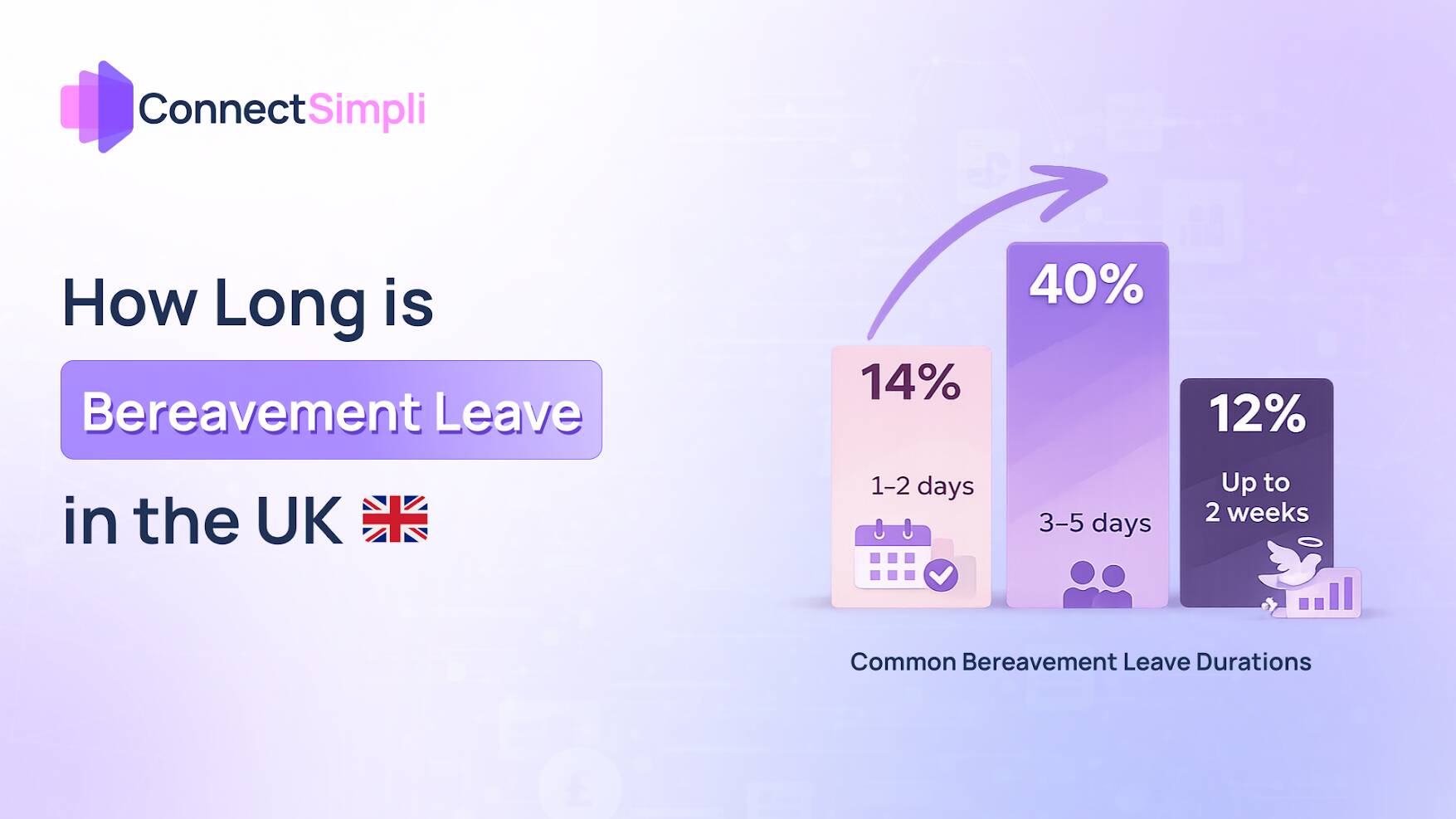
If you have lost someone close to you, it’s important to know how much time off work you can lawfully take. In the UK, the length of bereavement leave depends on your relationship with the deceased and your unique job contract.
Many individuals use the term “bereavement leave,” however UK law makes a difference between your legal rights (the minimum you are entitled to) and compassionate leave (the policy of your organization).
Statutory Leave: What the Law Guarantees
Under the Employment Rights Act 1996 and the recent Employment Rights Act 2025 updates, you have specific legal protections:
- Time Off for Dependents: If you have a spouse, partner, kid, parent, or someone else who depends on you, you have the right to take “reasonable” unpaid time off to cope with an emergency.
- What does “reasonable” mean? The legislation doesn’t say how many days are needed, but in practice, 1 to 2 days is plenty to take care of things like planning a funeral or dealing with a catastrophe.
- Day One Safety: This is a “Day One” right as of April 2026. You have the right to this time off from the first day of your job.
Fixed Leave for Specific Circumstances
There are two situations in 2026 when the law says how long leave must be:
- Jack’s Law: Leave for Parents Who Have Lost a Child: If a parent loses a child who is less than 18 years old (or has a stillbirth after 24 weeks), they can take two weeks off. You can use this as one block of time or two distinct weeks within 56 weeks after the death.
- Paternity Leave for a Partner Who Has Lost a Loved One: After the changes in April 2026, if a mother or primary adopter dies during the first year of a child’s life, the other spouse has the right to take up to 52 weeks of leave to care for the child.
How Many Days Do Employers Usually Give?
Most UK companies offer extra “Compassionate Leave” because the legal “reasonable” term is short. Acas and latest CIPD data show that the usual lengths are:
- 3 to 5 days for immediate family (partner, child, parent).
- 1 to 3 days for close family members like siblings and grandparents.
- 1 day for close friends or family, generally for the funeral.
The CIPD Health and Wellbeing at Work 2025/26 research says that 67% of UK businesses currently have written policies that set these time frames, and they often give them as paid leave.
Things That Can Make Your Leave Longer
The standard three to five days isn’t always enough. You might be able to take additional time off if:
- Acting as the Executor: You will have to spend a lot of time taking care of an estate or a difficult will.
- Travel is Necessary: If the funeral is in another country or requires a long trip.
- Health Impact: If your grief is impacting your mental health, you may need to take Sick Leave. Under the April 2026 SSP reforms, if your doctor confirms you cannot work due to illness, you can claim Statutory Sick Pay (SSP) from the first day of your absence.
How to Ask for More Time
If the “reasonable” time or the days your boss gives you aren’t enough, you should talk to your manager about the following options:
- Annual Leave: Taking extra time off to stay home using your holiday entitlement.
- Unpaid Leave: Asking for more time off without pay to focus on personal matters.
- Flexible Working: Requesting a phased return or temporary remote work to assist you in staying up with your tasks while you transition back.
FAQs on Leave Duration
Is there a legal limit on bereavement leave?
For general bereavement (excluding children), there is no upper limit defined by law, only the “reasonable” standard for immediate emergencies. Most employees return within a week, but longer absences are handled via annual leave or sick leave.
Does leave change if I’ve just started my job?
No. Following the 2026 updates, the right to take time off for dependents is a Day One right. You do not need a minimum period of service to be protected.
Can my employer force me to return after one day?
While the law only guarantees “reasonable” time for emergencies, Acas suggests that employers should be flexible. Forcing an employee back too soon can lead to long-term stress and performance issues.