

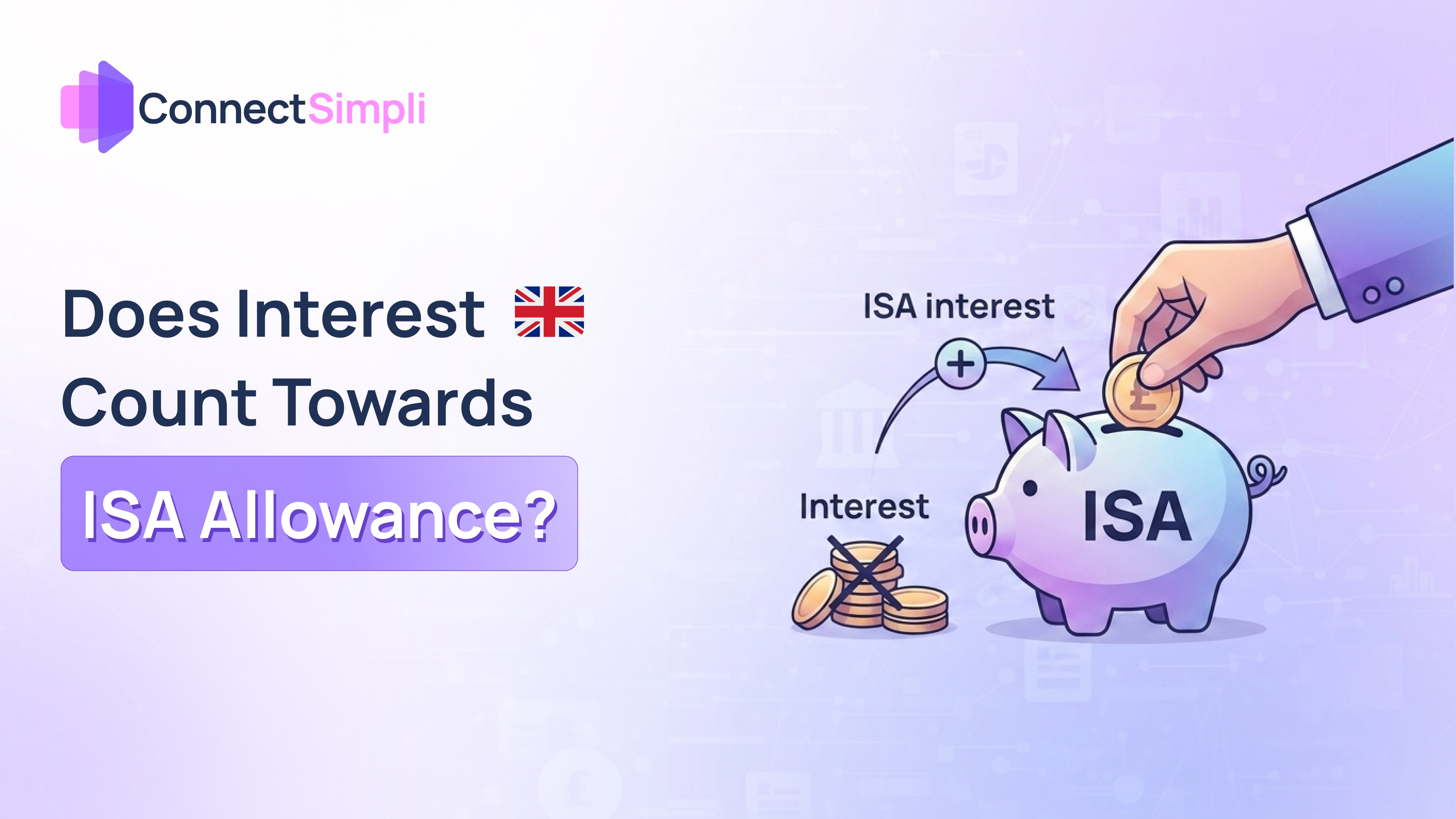
The short answer is no. Your ISA allowance—currently £20,000 for the 2026/27 tax year—only applies to the new money you pay into your accounts. Any interest, dividends, or investment gains generated by the money already inside your ISA are “extra.” They do not reduce your remaining allowance for the year.
Example: If you deposit £20,000 on day one and earn £800 in interest by the end of the year, your balance becomes £20,800. You have not broken any rules; you have simply maximized your tax-free growth.
How Does the £20,000 Limit Actually Work in 2026?
The allowance is a “subscription” limit, meaning it only counts the funds moving from your non-ISA bank accounts (or salary) into the ISA wrapper.
- What Counts: Cash deposits, monthly standing orders, and lump-sum payments.
- What Is Ignored: Interest, stock market growth, and dividends.
- 2027 Reform Watch: While the current limit is £20,000, a proposed change for April 2027 would cap Cash ISA deposits at £12,000 for those under 65. Under this new rule, earning high interest inside the ISA will be the only way to grow your cash pot beyond that £12,000 ceiling.
Can My ISA Balance Legally Exceed £20,000?
Yes. There is no legal limit on how large your ISA balance can grow. The £20,000 limit only restricts how much you can add each year.
- Compounding Growth: Because interest and dividends don’t count toward the limit, a “maxed-out” ISA will naturally grow beyond £20,000 within its first year.
- Long-Term Strategy: Over a decade, a saver who contributes the maximum each year could easily have a balance of £250,000+, even though they only “contributed” £200,000. All of that growth remains 100% tax-free.
What Happens if I Reinvest My ISA Dividends or Interest?
If your ISA provider automatically reinvests your interest or dividends back into your account, it does not use up your allowance. This is considered “internal movement.”
- Automatic Reinvestment: Increases your balance without touching your £20,000 limit.
- Manual Re-entry: If you withdraw interest to your current account and then try to pay it back in later, it will count as a new contribution (unless you have a Flexible ISA).
Will Withdrawing Interest Affect My Remaining Allowance?
This depends entirely on whether your account is a Flexible ISA.
- Standard ISA: If you withdraw £1,000 of interest, that “space” in your allowance is gone. You cannot put it back in if you’ve already hit your £20,000 limit.
- Flexible ISA: You can withdraw funds (including interest) and replace them within the same tax year without it counting as a new contribution.
- Top Tip: Check your account terms for the “Flexible” label before taking money out.
Summary Table: What Triggers an ISA Breach?
| Action | Does it count toward your £20,000? | Result |
| Salary/Bank Deposit | Yes | Reduces your remaining allowance. |
| Interest Payments | No | Increases balance; allowance stays same. |
| Investment Gains | No | Increases balance; allowance stays same. |
| LISA Govt Bonus | No | Treated as internal growth; limit stays same. |
| ISA-to-ISA Transfer | No | If done via official form, ignores allowance. |
The “British ISA” and Future Planning
If introduced, the proposed “British ISA” would offer an additional £5,000 allowance for UK-focused investments. Just like existing ISAs, the same rule would apply: only your initial £5,000 contribution counts, while any dividends or growth from those UK stocks would remain allowance-neutral.
Do I Need to Report ISA Interest to HMRC?
No. One of the primary benefits of an ISA is that you do not need to declare interest, dividends, or capital gains on your Self Assessment tax return. Your ISA manager reports your contributions to HMRC, but your earnings are entirely private and tax-exempt.