

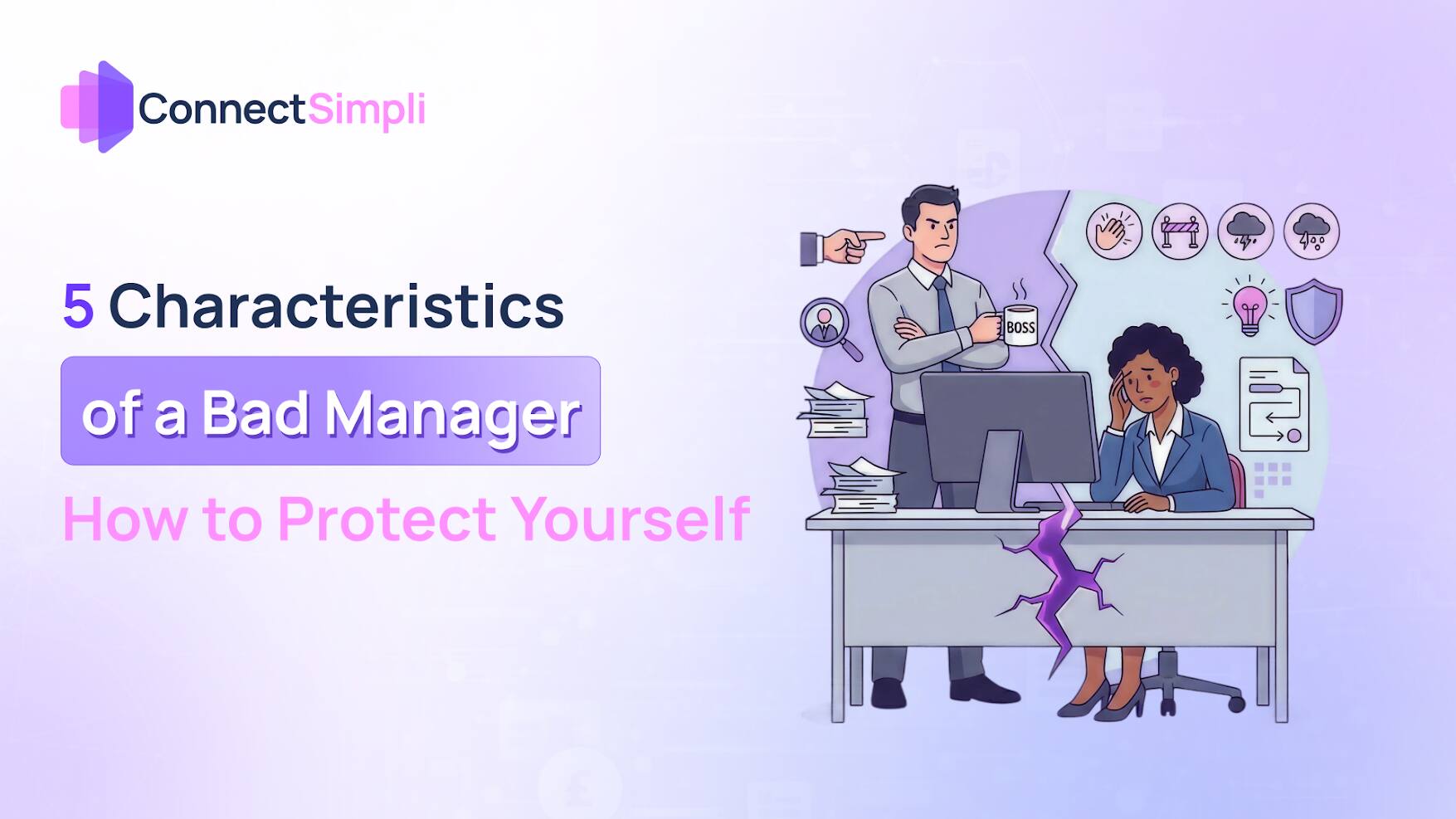
Good leadership is very important for a healthy workplace. According to Gallup’s State of the Global Workplace report, managers account for 70% of the variance in team engagement. Supportive leaders make places where people can get things done, but toxic bosses typically do the reverse. Their actions can make people more stressed, lower morale, and hurt workplace trust.
Both individuals and businesses need to know how to spot these indications so they can find problems early. Recent organizational research has shown five significant signals that a manager is toxic.
They Create Constant Stress Instead of a Healthy Environment
Toxic managers introduce chronic stress that harms emotional and mental well-being. The APA’s Work and Well-being Survey notes that a lack of support is a primary driver of workplace burnout.
- Unrealistic Expectations: Setting impossible deadlines without regard for workload capacity.
- Digital Surveillance: Obsessively monitoring “active” statuses; research shows that electronic monitoring can increase worker anxiety.
- Fear of Failure: Overreacting to mistakes kills Psychological Safety, which Google says is the most important thing for a team to be successful.
- Emotional Volatility: Leading through mood changes. This often leads to workplace anxiety, where employees feel they must “check the weather” before speaking.
They Do Not Listen or Communicate Properly
Communication is the lifeblood of leadership. According to Gartner research, poor communication is a leading cause of project failure and employee frustration.
- Ignoring Feedback: Frequently dismissing employee suggestions. Acas guidance emphasizes the importance of voice in the workplace.
- Ambiguity: Providing imprecise instructions. Clear job descriptions are a legal right and a performance necessity.
- Information Silos: Keeping important information hidden to maintain control.
- Gaslighting: This is a form of workplace bullying used to undermine an employee’s professional confidence.
They Show Little Empathy Toward Employees
Empathy is a top-priority leadership requirement. Businessolver’s State of Workplace Empathy found that 90% of employees are more likely to stay with an empathetic employer.
- Dismissing Well-being: Treating burnout as a “lack of resilience.” The World Health Organization (WHO) classifies burnout as an occupational phenomenon.
- Lack of Personal Support: Showing coldness during health issues. Employers have a duty of care to support staff.
- Resource Mentality: Treating employees as “units of production.”
- Zero Grace Periods: Failing to provide support during bereavement or personal grief.
They Actively Damage Team Trust
Trust is the foundation of high-performance. The Harvard Business Review reports that employees in high-trust companies experience 74% less stress.
- Favoritism & Exclusion: This often stems from unconscious bias and destroys cohesion.
- Deflecting Accountability: Taking credit for success while scapegoating the team for failure.
- Public Humiliation: A manager should never use meetings to embarrass employees; this may constitute harassment.
- Triangulation: Pitting employees against each other, which violates the Equality Act 2010 regarding a hostile work environment.
They Make Employees Feel Undervalued and Stagnant
A manager’s job is to grow their people. Statistics from the Pew Research Center show that career stagnation is a top reason for the “Great Resignation”.
- Micromanagement: Smothering autonomy, which is proven to reduce intrinsic motivation.
- Talent Hoarding: Blocking employees from promotions or training to keep them in their current role.
- The “Replaceable” Narrative: A tactic used to lower employee self-worth and reduce bargaining power.
- Neglecting Growth: Failing to discuss long-term career development goals.
FAQ: Navigating Toxic Management
Q: How can I tell the difference between a “tough” manager and a “toxic” one?
A: Tough managers challenge you to grow with support; toxic managers target your well-being. Read the NICE guidelines on workplace health for more on healthy environments.
Q: What should I do if my manager is a micromanager?
A: Try “over-communicating” progress. Research in the Journal of Applied Psychology suggests proactive reporting can ease a manager’s anxiety.
Q: Is favoritism actually toxic?
A: Yes. It destroys team cohesion and can be a sign of proximity bias in hybrid teams.
Q: How do I handle a manager who takes credit for my work?
A: Maintain a visible “paper trail.” Documenting your work is essential for performance appraisals.
Q: Should I go to HR?
A: Only if you have a documented log. Remember, HR’s primary role is to mitigate organizational risk and ensure legal compliance.
Q: How do I protect my mental health?
A: Set firm digital boundaries and seek support from the NHS Mental Health at Work portal.
Q: Can I fix a toxic manager?
A: Rarely alone. It usually requires 360-degree feedback loops and organizational intervention.