

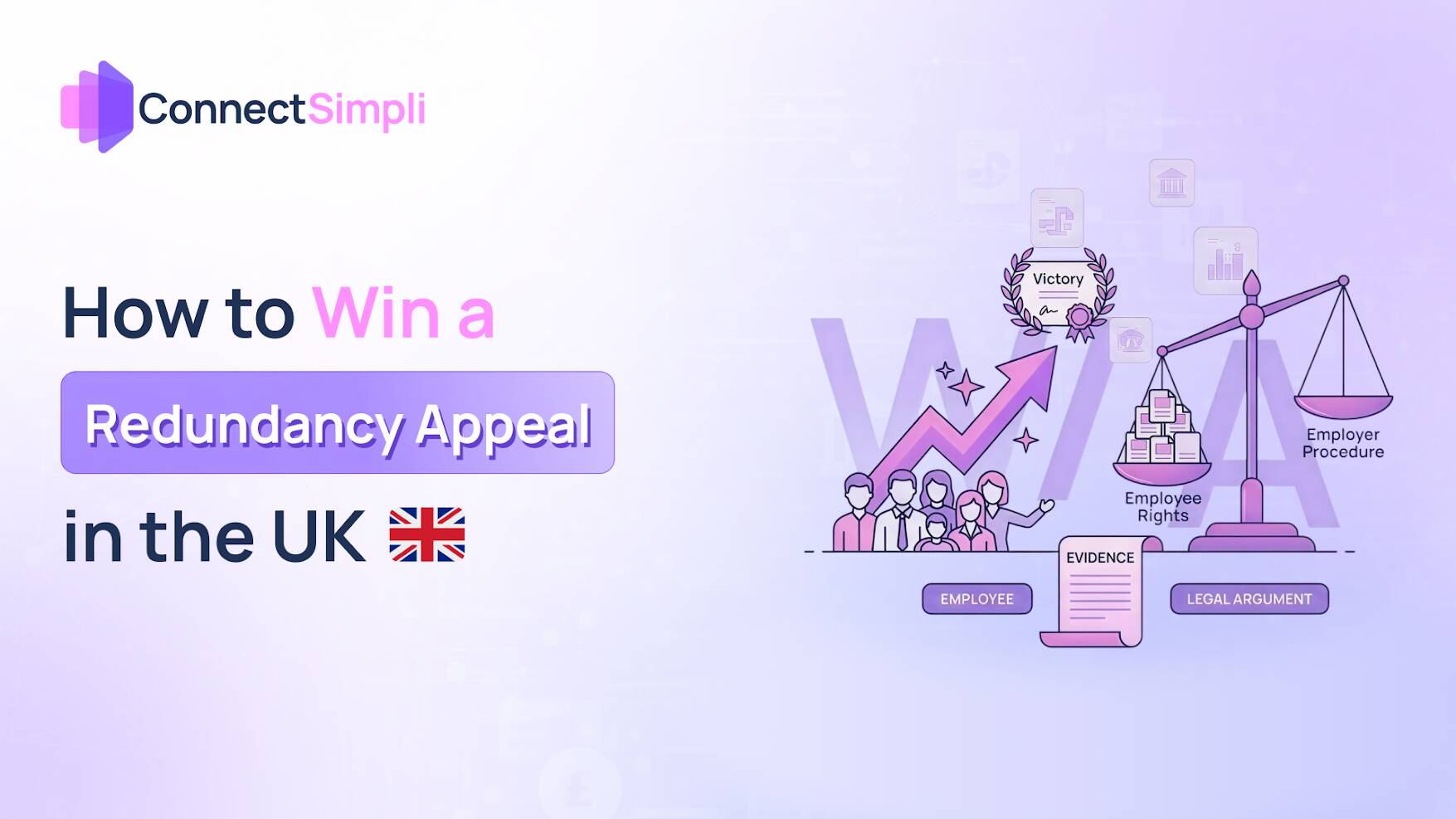
While many assume a redundancy notice is a final exit, an appeal is a formal legal opportunity to challenge the decision. In 2026, the stakes for employers are higher than ever: a successful appeal doesn’t just win on “fairness”—it wins on identifiable procedural or evidentiary errors. According to Acas, a fair process is a legal requirement, and failing to follow it can turn a redundancy into a case of unfair dismissal.
The 2026 Legal Landscape: High-Stakes Reform
The Employment Rights Act 2025 has significantly shifted the power balance:
- The Fair Work Agency (FWA): Launched on 7 April 2026, the FWA acts as a central enforcement body. It can inspect company records and fine businesses for “systemic procedural failures.” Employers are now more likely to settle during an appeal to avoid an FWA audit.
- Doubled Penalties: For collective redundancies (20+ people), the maximum Protective Award for failing to consult has doubled from 90 days to 180 days’ gross pay per employee as of 6 April 2026.
- Day-One Rights: As of 6 April 2026, paternity and unpaid parental leave are “day-one rights,” and Statutory Sick Pay (SSP) is now payable from the first day of illness.
5 “Winning Grounds” for Your Appeal
Your appeal must be anchored in specific legal flaws identified in The Employment Rights Act 1996:
- Unfair Selection Pool: Employers must define a fair “pool for selection”. If you were placed in a “pool of one” while others do identical work, the selection may be void.
- Biased Scoring Matrix: Subjective criteria like “attitude” are prone to bias. If your score contradicts documented performance reviews, you have a strong ground for appeal.
- Lack of Meaningful Consultation: Consultation must happen while proposals are “formative.” If the decision was pre-determined, it is a sham consultation.
- Failure to Redeploy: Employers have a statutory duty to search for Suitable Alternative Employment (SAE).
- Discrimination: Selection based on protected characteristics is “automatically unfair.”
Gathering Your Evidence: The “Discovery” Phase
- Subject Access Request (SAR): Under UK GDPR, request your data to find the “real” reason for selection.
- Performance Benchmarking: Gather appraisals. If your record shows you “Exceed Expectations” but your score is “Below Average,” the company has an evidentiary crisis.
- External Data: Check the ONS Labour Market statistics. If your employer is hiring for a similar role, the “role” is clearly not redundant.
Redundancy Appeal FAQs (2026 Edition)
Can I appeal if I have worked there for less than 2 years?
Yes, you can still appeal internally. However, until 1 January 2027, you generally need 2 years of service to claim “ordinary” unfair dismissal at a tribunal. But note: you can claim from day one if the redundancy is for an “automatically unfair” reason (e.g., whistleblowing, pregnancy, or health and safety).
Can the Fair Work Agency (FWA) help me directly?
The FWA (launched April 2026) does not represent individuals in tribunals, but they can investigate companies for failing to follow procedural laws, such as not paying the correct Statutory Redundancy Pay. Mentioning your intent to report a procedural breach to the FWA can be powerful leverage.
Will appealing make my settlement offer smaller?
Almost never. In fact, a well-structured appeal usually increases your leverage. If your appeal exposes a legal risk (like biased scoring), the employer will often offer an enhanced Settlement Agreement to “buy out” your right to go to a tribunal.
What is the “180-Day Rule” for 2026?
As of April 2026, if an employer fails to consult properly in a collective redundancy (20+ people), a tribunal can award you up to 180 days’ gross pay as a “Protective Award.” This is a significant increase from the old 90-day limit and makes a lack of consultation a very expensive mistake for employers.
Common Mistakes That Guarantee a Loss
- Missing the Deadline: Most contracts specify a window of 5 working days. Missing this usually ends your internal appeal rights.
- Using Emotional Language: Tribunals decide on law and evidence. Keep every argument anchored in procedure.
- Misciting the Code: The Acas Code on Disciplinary and Grievance does not strictly apply to redundancy. You must cite the Acas Guide on Managing Redundancies instead.