

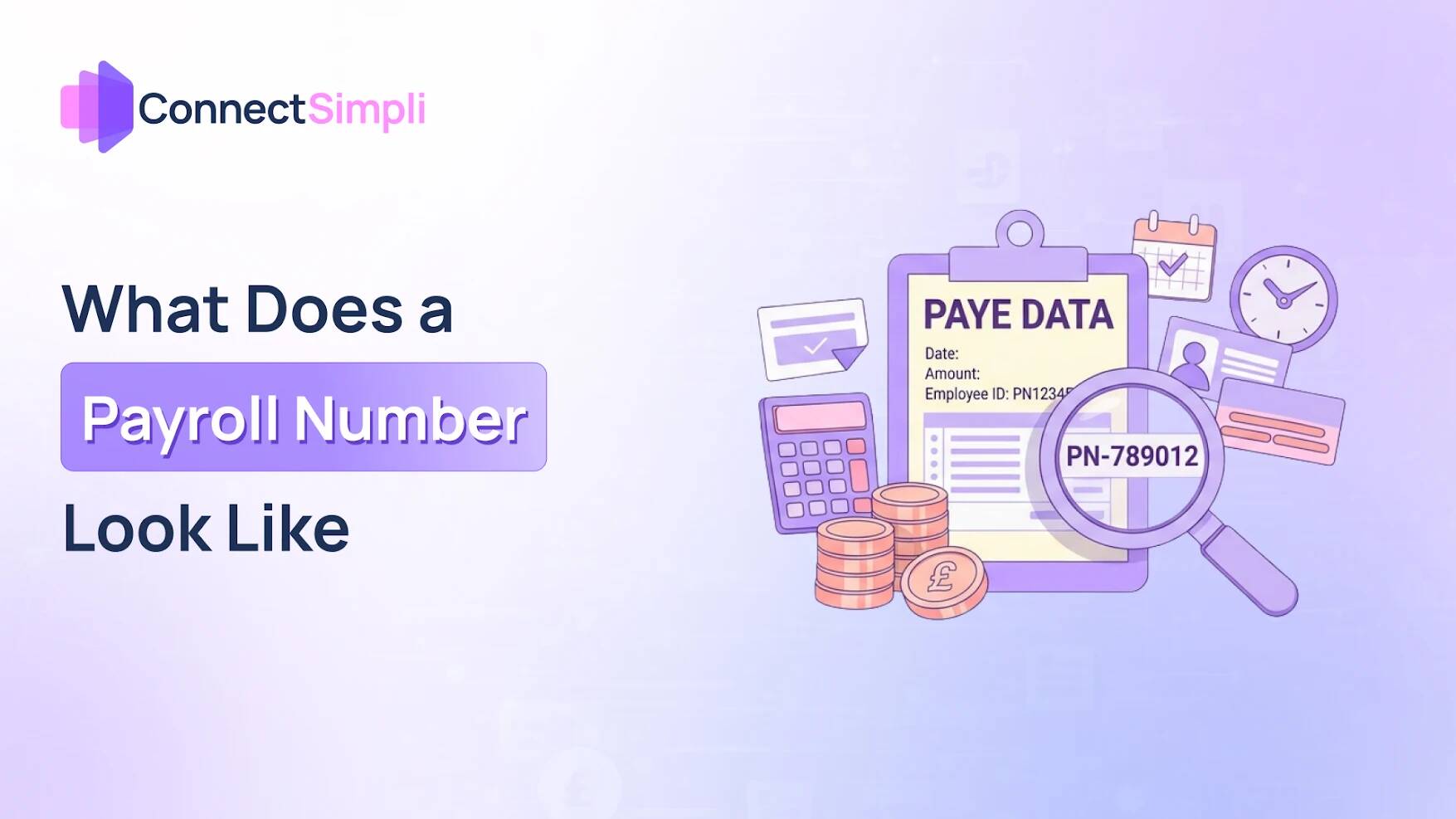
You need to know that a payroll number is not a government-issued ID like your National Insurance number in the 2026/27 tax year. Your employer’s software makes an internal “fingerprint” of your pay records instead. There is no one national format, but the way these numbers look follows highly particular digital patterns that depend on the software your organization utilises.
What Are the Typical Character Patterns?
Depending on how big and old your business is, your payroll number (also called a Payroll ID or Staff Ref) will look like one of these typical styles:
- The Sequential Numeric: A simple string of numbers, often padded with leading zeros if the company has many employees.
- Examples: 00124, 5582, or 10056
- The Alphanumeric Hybrid: A combination of letters and numbers, frequently used by large corporations to distinguish departments or regions.
- Examples: EMP992, XJ-881, or AB450
- The Segmented ID: Uses a dash or slash to separate information like the year of joining or a cost center.
- Examples: 2026/04, FIN-102, or UK_882
- The Employee-Name Hybrid: A shortened version of your name followed by a unique digit.
- Examples: JSMITH01, B-WILLIAMS, or ID-RK7
What Is the Common Length and Structure?
While formats vary, the best UK payroll software in 2026/27 sticks to these visual parameters:
- Average Length: 5 to 8 characters is the UK “sweet spot.”
- Minimum Length: Can be as short as 1 to 3 digits in very small businesses (e.g., 101).
- Maximum Length: Large enterprise systems may use up to 12 characters (e.g., 000000123456).
Which Visual Labels Should You Look For on Your Documents?
You are looking for a unique code—not your name—usually located in the top 20% of your payslip. Because different software uses different terminology, look for these specific labels:
| Printed Label | Visual Example |
| Emp No. | 1022 |
| Staff Ref | AB8821 |
| Payroll ID | 99021 |
| Personnel No. | 001142 |
| Pay Ref | Z-101 |
| Clock No. | 554 (Common in retail/manufacturing) |
How Do You Know Which Code Is NOT Your Payroll Number?
To identify the correct number, you must visually eliminate these other codes that appear on the same page:
- National Insurance (NI) Number: This is always 9 characters long and follows a strict XX 12 34 56 X format.
- Tax Code: Usually 4 numbers and a letter (e.g., 1257L or S1257L in Scotland).
- Employer PAYE Reference: Usually contains a forward slash and identifies the whole company (e.g., 123/AB456).
Conclusion
Understanding what your payroll number looks like is more than just an administrative curiosity; it is a vital part of your financial identity within a company. In the 2026/27 tax year, these identifiers are the primary link between your employer’s records and HMRC’s Real-Time Information (RTI) system.
Whether you are applying for a mortgage, verifying your income for a loan, or simply ensuring your taxes are filed correctly, knowing how to spot this unique code ensures you can communicate effectively with HR and government agencies alike. If your payslip ever lacks this number or shows a sudden change in format, treat it as a priority to clarify with your payroll team to avoid potential tax code errors.
Frequently Asked Questions (FAQs)
Is my payroll number the same as my Employee ID?
In most modern companies, yes. Employers often use the same alphanumeric string for both your HR profile and your payroll record to keep data consistent. However, in older “legacy” systems, you might have a separate Clock Number for payroll and a Staff ID for HR.
Can two people have the same payroll number?
Never within the same company. The payroll number exists specifically to prevent “duplicate name” errors. If a company has two employees named “John Smith,” the payroll number is the only way the system knows whose bank account to send the money to.
Does my payroll number change if I get a promotion?
Generally, no. Your payroll number is usually tied to your start date and remains with you for your entire “period of service” at that company, regardless of how many times you change roles or departments.
Why does my payroll number look different on my new job’s payslip?
Because payroll numbers are internal to the company. There is no universal format. Your new employer will be using different payroll software with its own specific numbering logic, such as switching from a numeric system to an alphanumeric one.
What should I do if my payroll number is missing?
If the “Emp No” box is blank, it usually means your record hasn’t been fully finalized, which is common during your first month. You should contact your payroll team or HR department to ensure your Real Time Information (RTI) has been submitted to HMRC correctly.
Appearance Summary Checklist
- [ ] Location: Is it in the top header of the document?
- [ ] Length: Is it between 3 and 10 characters long?
- [ ] Label: Does it say “Emp No,” “Staff Ref,” or “Payroll ID”?
- [ ] Difference: Is it distinct from your 9-character NI number?