

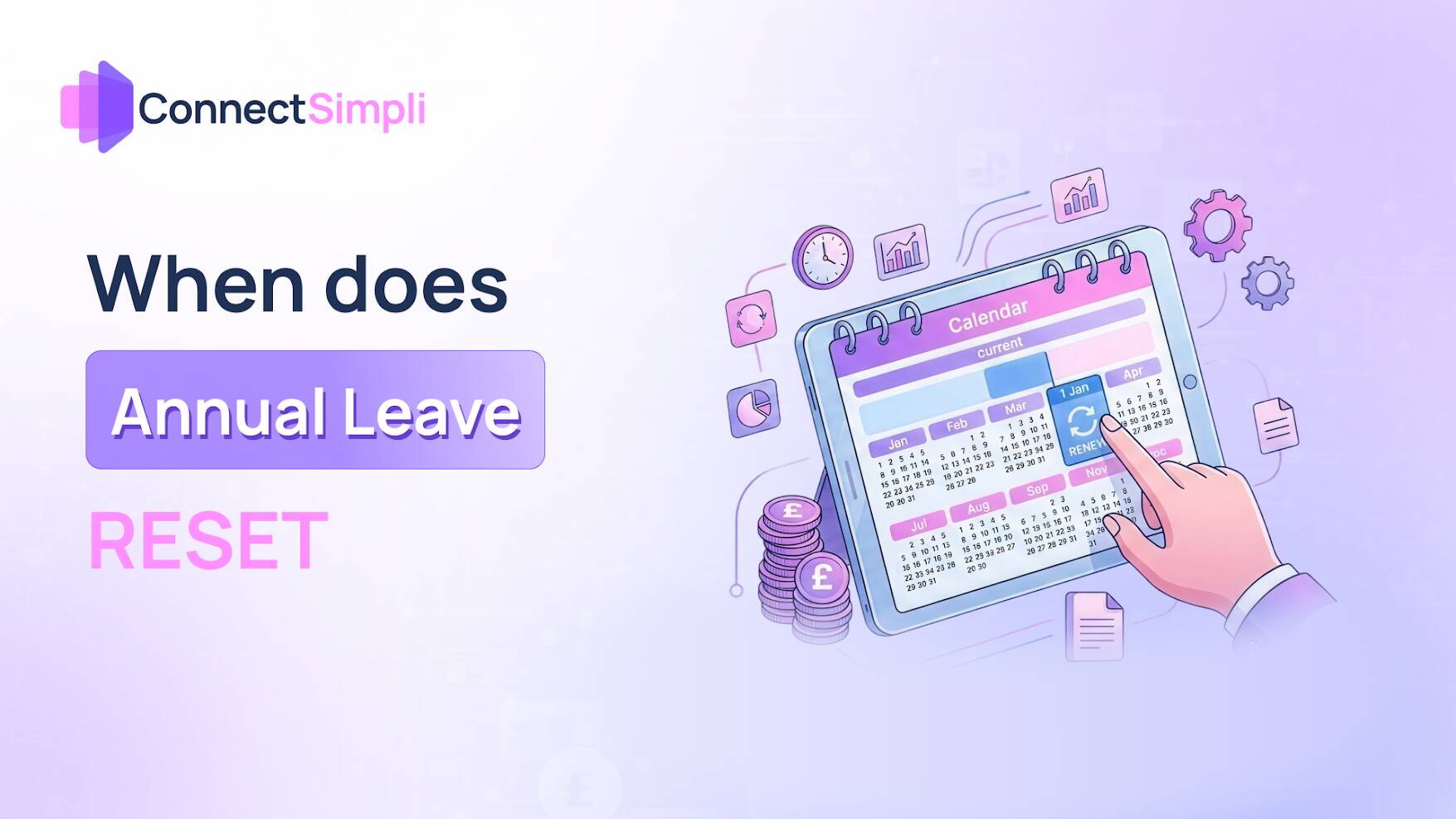
In the UK, annual leave does not reset on a single national date. Instead, each employer establishes a “leave year” that determines when your holiday entitlement begins and ends.
Under the Working Time Regulations 1998, most workers are legally entitled to a minimum of 5.6 weeks of paid annual leave (28 days for a full-time employee). However, as confirmed by Acas, the specific reset date is dictated by your employer’s internal policy.
Understanding this cycle is essential for strategic planning to ensure you maximize your time off and avoid “use-it-or-lose-it” clauses that could result in the loss of unused days.
The 3 Most Common Reset Cycles
While an employer can technically choose any date, most UK businesses fall into one of these three categories:
- The Calendar Year (1 January – 31 December)
This is the standard for the majority of private-sector companies. It’s easy to track but often leads to a “December Logjam” where everyone tries to take the last two weeks of the year off at once.
- The Financial Year (1 April – 31 March)
This is the default for the NHS, Civil Service, and most Schools. Many SMEs also use this to align holiday costs with their tax and budget reporting.
- The Anniversary Model (Individual Start Date)
Your leave resets on the anniversary of your first day at work. While this is harder for HR to track, it’s a strategic way companies prevent entire teams from being absent at the same time during Christmas or March.
How to Find Your Specific Reset Date
If you are unsure of your cycle, research from the CIPD suggests checking these three locations:
- Check Your Written Statement of Employment: By law, your employer must provide a document (usually your contract) that specifies the start and end dates of your leave year.
- Access Your HR Portal: Most modern firms use software like Connect Simpli. Your “Dashboard” will usually list your “Leave Year End” alongside your remaining balance.
- Consult the Staff Handbook: If the contract is vague, the company-wide policy is almost always detailed here under “Benefits” or “Absence Management.”
Pro Tip: According to Acas guidance, if you cannot find a written agreement, your leave year by default starts on the anniversary of your first day at work.
“Use-it-or-Lose-it”: The 2026 Carry-Over Rules
Can you carry over unused days? In 2026, the rules are stricter, but the protections are stronger.
- The General Rule: You do not have an automatic legal right to carry over your statutory 5.6 weeks (28 days). If your contract says “use it or lose it,” those days will vanish on your reset date.
- Contractual Flexibility: Research from the CIPD Health and Wellbeing at Work 2025/26 report shows that many firms now allow employees to carry over up to 5 days, provided they are used within the first quarter of the new year.
- Legal Protections (Mandatory Carry-Over): * Sickness: If you were too ill to take your holiday, you can carry over up to 20 days of your leave, which must be used within 18 months.
- Parental Leave: If you are on Maternity, Paternity, or Adoption leave, your full holiday entitlement carries over.
- Employer Failure: Under 2026 Fair Work Agency guidelines, if your employer failed to encourage you to take leave or warn you that you’d lose it, you may be entitled to carry it over.
Can Employers Require You to Take a Holiday?
Yes. Employers in the UK are legally allowed to tell employees when to take annual leave. However, they must provide advance notice, which is normally at least twice the length of the leave requested.
For example:
If an employer wants you to take five days of holiday, they should usually give at least ten days’ notice. This rule helps businesses manage staffing levels while still protecting employees’ rights.
FAQs: Quick Answers for 2026
Is annual leave always April to April?
No. While common in the public sector, it is entirely up to your employer’s policy.
Can my boss force me to take my leave before it resets?
Yes. Under Acas rules, your employer can tell you when to take holiday, provided they give you notice that is twice as long as the leave they want you to take.
Does my leave reset if I’m on Statutory Sick Pay (SSP)?
Yes, but since April 6, 2026, SSP is a Day One right. If you are sick during your holiday, you can ask to “reclaim” those holiday days and be put on sick leave instead.